
Rio de Janeiro attracts millions of visitors annually, yet most follow predictable paths to the same iconic landmarks. Experiencing the city as locals do requires moving beyond postcard views to discover the neighborhoods, food markets, and cultural spaces where cariocas—residents of Rio—actually spend their time. This itinerary prioritizes authentic experiences, efficient public transportation, and genuine encounters with the city’s diverse communities.
Understanding Rio’s Neighborhood Structure and Transportation Network
Rio de Janeiro spans across multiple distinct neighborhoods, each with its own character, history, and local population. The city’s geography divides into zones: the South Zone includes affluent coastal areas like Copacabana and Ipanema; the North Zone contains working-class neighborhoods and cultural hubs; the West Zone extends toward the mountains and suburbs; and the Center holds historical colonial architecture and government buildings. Understanding this structure helps travelers navigate efficiently and choose experiences aligned with their interests.
The Metro (subway system), operated by SuperVia, connects major neighborhoods and costs approximately 4.40 Brazilian reals (roughly $0.90 USD) per journey as of recent fare structures. Bus networks crisscross the entire city and offer the cheapest transportation option at similar prices, though routes require local knowledge. Many locals use the Bilhete Único card, a rechargeable transit card accepted on Metro, buses, and trains, which provides convenience and occasional discounts for multiple journeys.
Day One: Centro and Local Markets
Begin in Centro, Rio’s historic downtown district, where colonial architecture from the 17th and 18th centuries still frames the streets. Start at the Biblioteca Nacional (National Library), one of the largest libraries in the world with over 9 million items, located in Cinelândia. From there, walk to the Theatro Municipal, an ornate opera house completed in 1909 that hosted performances by famous dancers and musicians throughout the 20th century. These institutions remain working cultural centers rather than museums, so visitors encounter locals attending rehearsals and exhibitions.
Next, head to Saara, a sprawling commercial district spanning multiple blocks where locals shop for clothing, electronics, and household goods at wholesale prices. The market operates as an open-air bazaar with narrow alleys, small storefronts, and vendor stalls. Lunch at a boteco—a casual neighborhood bar serving simple food—located within or near Saara provides authentic carioca cuisine: pastéis (fried pastries), coxinhas (chicken croquettes), and fresh juices made from tropical fruits like açaí and cupuaçu.
Day One Evening Through Day Two: Santa Teresa and Lapa
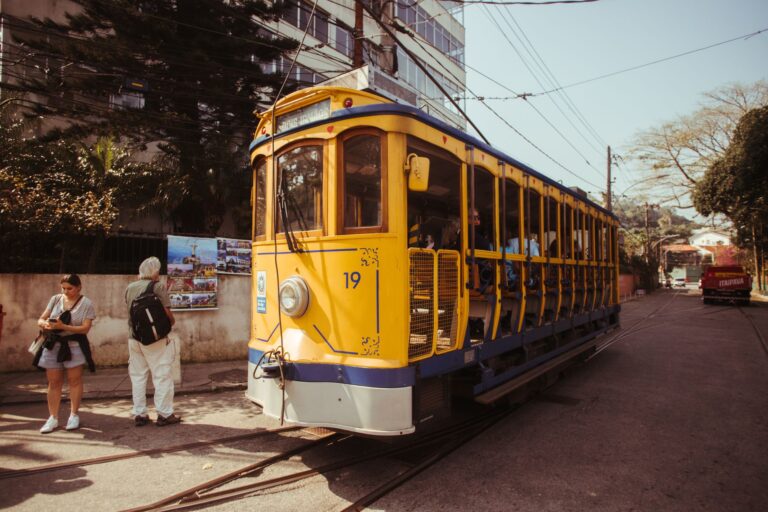
Take the historic Bondinho tram, a cable car system operating since 1877, from Centro up to Santa Teresa, a bohemian neighborhood perched in the hills with winding cobblestone streets and colonial mansions converted into galleries and restaurants. The tram journey itself provides views across the city and connects travelers to a neighborhood locals visit for art, music, and nightlife. Walk through the residential streets to discover street art, independent shops, and small cafés where artists and musicians gather.
In the evening, descend to Lapa, the neighborhood directly below Santa Teresa, where the famous Arcos da Lapa (Lapa Arches)—a 18th-century aqueduct converted to a pedestrian bridge—serves as the district’s centerpiece. Lapa functions as Rio’s primary nightlife hub, with live music venues, samba clubs, and bars operating nightly. Locals frequent establishments like Fundição Progresso, a converted foundry hosting concerts and parties, and Carioca da Gema, a traditional samba venue where both tourists and residents dance to live music.
Day Two: Favela Tours and Authentic Food Experiences
Many travelers overlook favelas—informal settlements built on hillsides throughout Rio—as dangerous areas to avoid, but responsible community-led tours provide genuine cultural experiences while supporting local residents. Several favelas operate official tourism cooperatives where guides, who are community members, lead visitors through neighborhoods, share histories, and direct tourism revenue back to residents. Santa Marta in Botafogo and Rocinha in the South Zone operate established tour programs.
These tours reveal how approximately 1.4 million cariocas live in favelas, communities that developed organically as working-class neighborhoods and contain vibrant street culture, street art, local businesses, and tight-knit communities. A guided tour lasting two to three hours costs between 50 and 100 Brazilian reals and typically includes visits to local shops, art installations, and viewpoints overlooking the city. Afterward, visit a local restaurant in a South Zone neighborhood like Botafogo or Catete for dinner, where neighborhood residents eat rather than tourist-focused establishments.
Day Three: Beaches and Neighborhood Culture
Rio’s beaches extend along the entire southern coast, and each has distinct character and local populations. Copacabana and Ipanema draw international visitors, but neighborhoods like Leblon, Barra da Tijuca, and even the smaller beach at Urca offer experiences closer to where locals actually swim and relax. Arrive early in the morning, when cariocas exercise on the beach promenade, play futsal (a five-a-side football variant), and swim before work.
Spend the morning at Praia da Urca or another less-crowded beach, where vendors sell fresh coconut water, grilled cheese, and fresh fruit directly from carts. The beach culture in Rio remains central to daily life; locals gather in the same spots regularly, creating informal communities around specific sections of sand. Return to a neighborhood like Botafogo, Flamengo, or Catete in the afternoon to explore residential streets, visit local museums like the Museu Carmen Miranda (dedicated to the famous Brazilian performer), and eat dinner at neighborhood restaurants.
Historical Context: Rio’s Evolution as a Modern City
Rio served as Brazil’s capital from 1763 until 1960, when Brasília replaced it as the seat of government. This history shaped the city’s architecture, cultural institutions, and social geography. During the 1960s and 1970s, urban planning initiatives modernized the city, including the construction of major highways and the development of the West Zone. The 2014 World Cup and 2016 Olympic Games brought massive infrastructure investment, including expanded Metro lines and the renovation of the Port Zone (Porto Maravilha).
These projects transformed certain neighborhoods while displacing residents from others, a tension visible throughout the city. The Port Zone renovation created new cultural spaces like the Museu de Arte do Rio (Rio Art Museum) and the Museu do Amanhã (Museum of Tomorrow), designed by renowned architect Santiago Calatrava. Understanding this recent history helps visitors appreciate how Rio continues evolving while maintaining the cultural practices and neighborhood identities that define local life.
Frequently Asked Questions
What is the best way to get around Rio de Janeiro without a car?
The Metro system connects major neighborhoods and costs under 5 reals per trip, making it the fastest option for longer distances. Buses are cheaper and cover more areas but require knowing route numbers; the Bilhete Único rechargeable card works on all public transportation and simplifies payment across systems.
Is it safe to visit neighborhoods like Lapa and Santa Teresa?
Both neighborhoods operate as established tourist and cultural destinations with significant foot traffic during day and evening hours. Visitors should avoid displaying expensive jewelry or cameras, stay in populated areas, and use official transportation rather than unmarked taxis—standard precautions applicable throughout Rio.
How much should I budget per day for food and activities?
A meal at a casual boteco costs 20-40 reals; favela tours run 50-100 reals; museum entries range from 10-30 reals; and public transportation costs roughly 20-30 reals daily for multiple journeys. Budget-conscious travelers can experience Rio authentically on 150-200 reals daily, or approximately $30-40 USD.
Experiencing Rio like a local means moving beyond famous beaches and Christ the Redeemer statues to discover the neighborhoods, markets, and cultural spaces where cariocas spend their daily lives. This three-day itinerary provides a foundation for understanding the city’s geography, history, and diverse communities while using public transportation and eating where residents eat, creating authentic connections to Rio’s living culture.
