
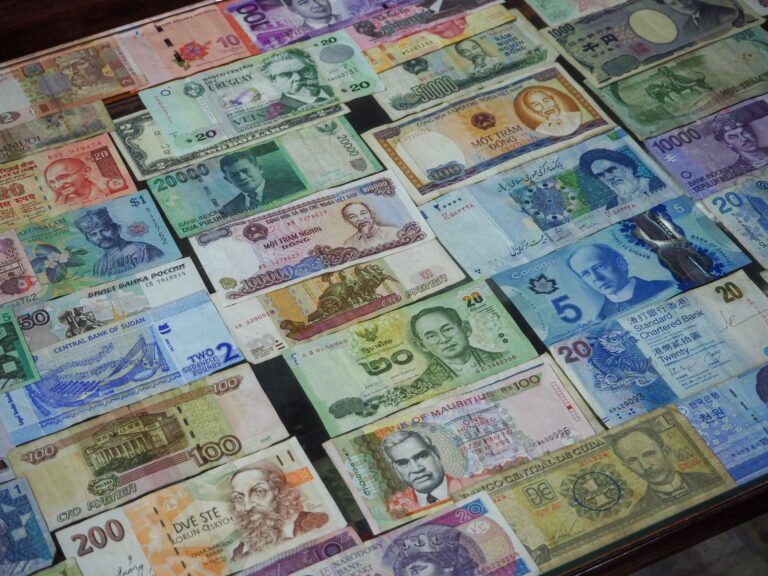
Currency exchange rates directly impact how far your travel budget stretches across destinations, making rate optimization a practical skill rather than an optional refinement. Whether you’re converting dollars to Brazilian reais in Rio de Janeiro or exchanging euros for Thai baht in Bangkok, the difference between a poor rate and a favorable one can amount to hundreds of dollars over the course of a trip. Understanding where rates come from, how they fluctuate, and which exchange channels offer genuine value separates savvy travelers from those who inadvertently hemorrhage money through avoidable fees and unfavorable conversions.
Understanding the Real Exchange Rate and Market Rates
The real exchange rate, also called the mid-market rate or interbank rate, represents the true value of one currency against another at any given moment. This rate reflects what major financial institutions pay when trading massive volumes of currency with each other on the foreign exchange market, commonly abbreviated as forex. For example, if the real exchange rate between the US dollar and Brazilian real stands at 5.00, this means one dollar theoretically equals five reals in pure market terms, before any fees or markups enter the equation.
The mid-market rate updates constantly throughout trading hours as global markets react to economic data, geopolitical events, and supply-and-demand shifts. According to historical forex data, the USD/BRL exchange rate has ranged from approximately 1.50 to over 5.50 across the past two decades, demonstrating how significantly rates fluctuate based on broader economic conditions. Every exchange service you encounter—whether a bank, airport kiosk, or ATM—uses this real rate as their baseline before adding their own markup, fees, or commissions.
The Markup Structure: How Exchange Services Profit
All currency exchange services profit by offering you a rate worse than the mid-market rate, meaning you receive fewer units of foreign currency for your home currency than the real rate would suggest. This difference, called the spread or markup, represents the exchange service’s revenue and covers their operational costs. A typical airport currency exchange might offer a spread of 5 to 10 percent above the mid-market rate, while a bank might charge 2 to 4 percent, and a peer-to-peer currency exchange service might charge only 0.5 to 1.5 percent.
When travelers exchanged currency at Rome’s Fiumicino Airport in 2019, independent testing revealed that some kiosks applied markups exceeding 8 percent compared to the real rate, meaning a traveler converting $1,000 would receive approximately $80 less in euros than the true market value warranted. This explains why savvy travelers prioritize locating exchange channels with the smallest markups rather than simply accepting whatever rate appears at their first conversion opportunity.
Comparing Exchange Channels and Their Real Costs
Airport currency exchanges rank among the most expensive options available, typically charging 5 to 10 percent markups because they operate in captive markets where arriving travelers have limited alternatives and time pressure works against negotiation. Local banks in your destination country usually offer rates within 2 to 4 percent of mid-market because they handle high transaction volumes and face competition from other banks. ATM withdrawals using your home bank’s debit card frequently deliver rates within 1 to 3 percent of mid-market, though this varies by institution and whether the ATM is operated by your bank or a competitor’s network.
A 2018 study by the European Consumer Organization tested currency conversion costs across major European cities and found that ATM withdrawals consistently outperformed airport exchanges by 3 to 5 percentage points. Credit card transactions in your destination country’s currency typically fall between ATM and airport exchange rates in terms of cost, usually ranging from 2 to 4 percent markup depending on your card issuer. Peer-to-peer currency exchange platforms like Wise (formerly TransferWise) and OFX have disrupted the market by offering rates within 0.5 to 1.5 percent of mid-market, though they work best for larger transactions planned before departure.
Historical Evolution of Currency Exchange Access for Travelers
Before the 1970s, most countries maintained fixed exchange rates set by government agreement under the Bretton Woods system, eliminating the floating-rate fluctuations that modern travelers navigate. When this system collapsed in 1973, floating exchange rates introduced both opportunity and complexity for international travelers, who suddenly faced rates that changed daily. The introduction of ATM networks in the 1980s and 1990s gradually shifted the advantage away from airport exchanges toward bank-connected machines, though airport exchanges remained dominant for decades because ATM networks were less ubiquitous internationally.
The rise of online banking and peer-to-peer currency platforms in the 2010s fundamentally altered the landscape by enabling travelers to lock in rates before departure. Wise, founded in 2011 by Estonian entrepreneur Kristo Käärmann, disrupted the traditional currency exchange industry by using real mid-market rates and charging only a small, transparent fee rather than hidden markups. This innovation forced established players like banks and Western Union to improve their rates and transparency, demonstrating how competitive pressure benefits consumers when alternatives emerge.
Frequently Asked Questions
Should I exchange money before traveling or wait until I arrive at my destination?
Exchanging at your destination typically offers better rates than airport exchanges in your home country, so waiting is generally advantageous unless you need local currency immediately upon arrival. However, using ATMs or peer-to-peer services before departure to lock in rates and avoid airport exchanges entirely often proves superior to both options.
What’s the difference between a debit card ATM withdrawal and a credit card cash advance?
ATM withdrawals using a debit card typically charge only the ATM operator’s fee plus a small currency conversion markup, while credit card cash advances charge both a conversion fee and often a much larger cash advance fee (typically 3 to 5 percent). Debit card ATM withdrawals are almost always cheaper than credit card cash advances for currency conversion.
How can I check the real exchange rate while traveling?
Use XE.com, OANDA, or your bank’s own rate information to view mid-market rates in real time, then compare any offered rate against this baseline to calculate the exact markup percentage. This takes 30 seconds and immediately reveals whether you’re facing a reasonable 2 percent markup or an excessive 8 percent one.
Securing favorable currency exchange rates requires understanding that the mid-market rate serves as your benchmark, that different channels apply vastly different markups atop this rate, and that ATMs and peer-to-peer services generally deliver superior value compared to airport exchanges. By checking rates before converting, comparing available channels in your destination, and prioritizing ATM withdrawals and online services over airport exchanges, you consistently improve your effective purchasing power throughout your travels.
